eVent Fabrics — Ask a material question
A swatch name is useful; a dated reference with construction and treatment history is more precise. Use the message to connect those details to the application, whether the next step concerns a new specimen, a report interpretation or an order requirement.
Information for a focused review
- Composition and construction. Identify the membrane reference and describe the face textile and backing where known. State whether the sample is a loose membrane, a bonded panel or a joined assembly. A change to any layer belongs in the message because it changes what is being evaluated.
- Dimensions and targets. Include mass per unit area in g/m² and usable width in cm when available, separating measured sample details from requested targets. Add the intended cut direction or construction constraints. Keep tolerances as questions to agree with the final material specification. If you quote a figure, label it: a mass target in g/m², a cuttable width in cm, or a pressure result with its method, such as ISO 811 in kPa or an airflow setting of 125 Pa.
- Finish, care and evidence. Describe the shade reference, surface finish and any laundering or abrasion pretreatment. For a report question, name the method and edition, specimen reference and relevant conditions. Keep hydrostatic head, water vapor transmission and air permeability in separate parts of the brief. A coated face and a laminated membrane-plus-backing raise different questions: coating add-on does not describe bond-line behavior, and a liquid-water endpoint does not describe vapour movement. A 5-cycle wash before retest is a different specimen from an unwashed swatch.
- Quantity and destination. State the requested supply format, estimated quantity and delivery location as planning inputs. Identify the approval step you are approaching and the document you need to interpret. Commercial conditions and sample arrangements can then be discussed against the actual request.
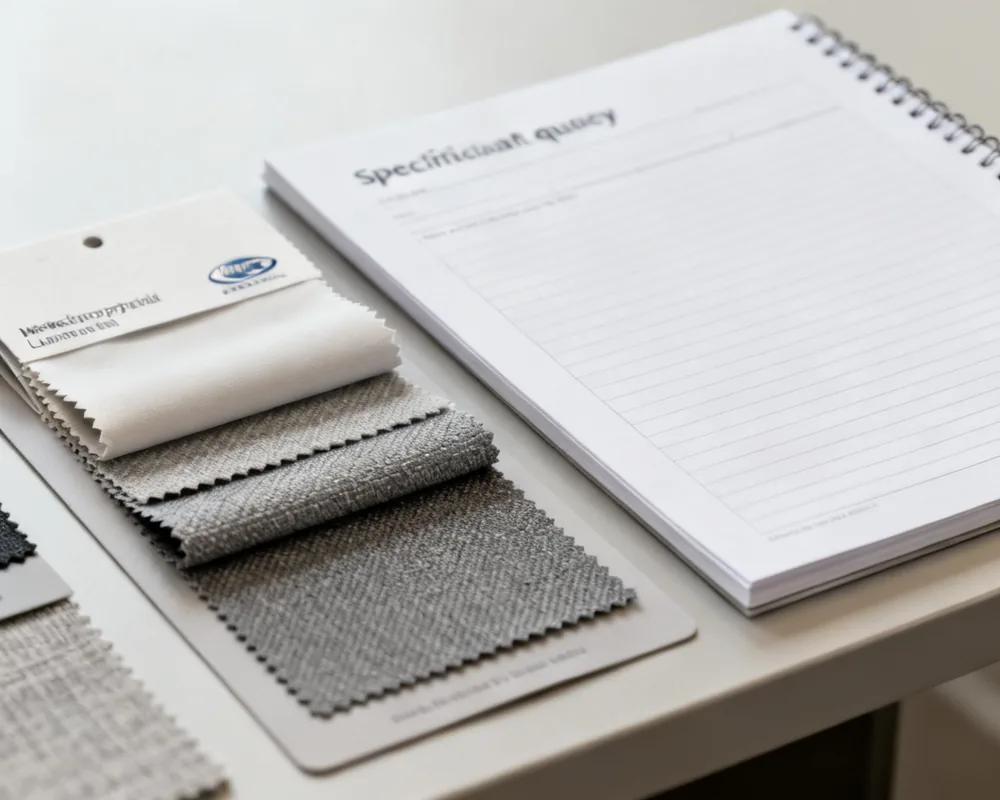
Send the material brief
Use the message below for the material reference and your main decision question. Include only the contact and project details needed to follow up. Preserve laboratory conditions beside any result you quote, and explain the intended care or assembly state so the discussion starts from a common specimen.